
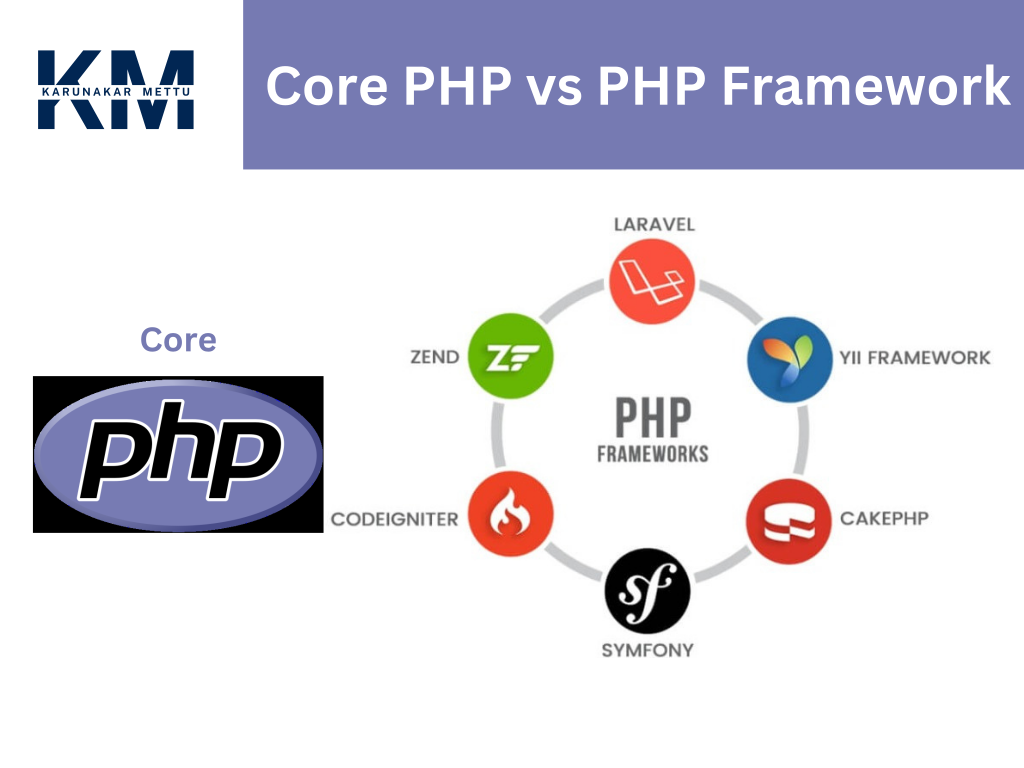
Core PHP vs PHP Framework: Which is Better for Web Development?
Choosing between core PHP and a PHP framework for web development depends on various factors, including the project requirements, developer experience, and long-term maintenance considerations. Here’s a detailed comparison to help you decide which might be better for your needs:
Understanding Core PHP
What is Core PHP?
Core PHP refers to the use of PHP in its most fundamental form. This approach entails coding PHP scripts from scratch without the influence of any external library or framework. This approach brings the coding and functionality of the software completely under the control of the core PHP developer.
Benefits of the Core PHP Development
The following are the benefits of having Core PHP Development:
- Flexibility: Core PHP offers full control over your codebase, allowing you to implement custom logic exactly as you need.
- No Learning Curve: If you’re already familiar with PHP, you don’t need to learn a new framework or its conventions.
- Performance: Direct use of PHP might offer slightly better performance since there’s no overhead from a framework’s abstractions.
- Lightweight: There's no additional weight from a framework's features you might not use.
Disadvantages of Core PHP Development
The following are the disadvantages of having Core PHP Development:
- Reinventing the Wheel: You’ll need to build common functionalities like authentication, routing, and form validation from scratch, which can be time-consuming and error-prone.
- Maintenance: Without the structure and conventions provided by a framework, maintaining and scaling core PHP applications can become challenging as the project grows.
- Security Risks: Implementing your own security features can lead to vulnerabilities if not done correctly.
Exploring the PHP Web Development Framework
What are PHP Web Development Frameworks?
PHP Web Development Frameworks supports constructing frameworks based on software frameworks, procedures and rules that strictly govern program implementation. PHP frameworks combine pre-built functional modules, libraries, and tools to make work easier and simpler. They present a well-defined style for developing applications, reducing the need to code the same phases repeatedly.
Popular PHP Web Development Frameworks
- Laravel: Developers prefer Laravel, which is noted for its elegant syntax and infinite functionalities.
- Symfony: A robust framework that can be implemented on large-scale applications, mainly for large enterprises.
- CodeIgniter: Easy to adopt and relatively small, thus suitable for small to medium projects.
- Yii: High-performance and most suitable for developing web applications of any complexity.
Advantages of PHP Web Development Frameworks
- Built-in Features: Frameworks come with many built-in features such as routing, ORM (Object-Relational Mapping), authentication, and form validation, which speed up development.
- Structure and Conventions: Frameworks enforce a structure that can make your code more organized and easier to maintain, especially in larger projects.
- Security: Frameworks often include built-in security features that help protect against common vulnerabilities like SQL injection and cross-site scripting (XSS).
- Community and Support: Popular frameworks have large communities, extensive documentation, and numerous third-party packages, which can assist in development and troubleshooting.
- Testing and Debugging: Frameworks often provide tools and conventions for unit testing and debugging, helping improve code quality and reliability.
Disdvantages of PHP Web Development Frameworks
- Learning Curve: There can be a learning curve associated with new frameworks, especially if you're unfamiliar with their architecture and conventions.
- Performance Overhead: Frameworks introduce some performance overhead compared to core PHP, though this is usually mitigated by optimizations and advancements in modern frameworks.
- Flexibility Limits: Frameworks impose certain conventions and structures, which might limit flexibility in some cases, especially for unconventional project requirements.
Core PHP vs PHP Frameworks: A Detailed Comparison
Choosing between Core PHP and a PHP Framework can be challenging. Below is a thorough comparison highlighting key aspects of Core PHP and PHP frameworks:
Development Speed
- Core PHP: Development with Core PHP can be slower since you need to build everything from scratch.
- PHP Frameworks: Frameworks significantly speed up development by providing pre-built modules and libraries.
Code Organization
- Core PHP: Organizing code is entirely up to the developer, which can lead to inconsistencies.
- PHP Frameworks: Frameworks enforce best practices and standardize code organization, resulting in a more structured approach.
Security
- Core PHP: Security must be manually implemented by the developer, requiring a deep understanding of security considerations and cautious handling.
- PHP Frameworks: Frameworks incorporate built-in security features, making it easier to develop secure applications.
Scalability
- Core PHP: Scaling Core PHP applications requires careful architectural planning and strategy.
- PHP Frameworks: Frameworks are designed with scalability in mind and can efficiently manage increased operational demands.
Customization
- Core PHP: Offers extensive customization opportunities, allowing you to tailor the application exactly to your needs.
- PHP Frameworks: While frameworks provide flexible functionality to meet specific requirements, customization is typically constrained by the framework’s structure.
Performance
- Core PHP: Generally faster for very simple projects due to the absence of framework overhead.
- PHP Frameworks: Although they may introduce some performance costs, frameworks are optimized to deliver good performance for most applications.
When to Choose Which?
Choose Core PHP if:
- Simple Projects: For small projects or simple applications where the overhead of a framework isn’t justified.
- Custom Requirements: When you need complete control over every aspect of your codebase and don’t want to work within the constraints of a framework.
- Learning: If you’re learning PHP and want to understand its core functionalities without the abstraction provided by frameworks.
Choose a PHP Framework if:
- Complex Projects: For larger and more complex applications where built-in features, organization, and scalability are crucial.
- Rapid Development: When you need to build and deploy applications quickly using the framework’s built-in functionalities.
- Team Development: In projects involving multiple developers, frameworks help enforce coding standards and conventions, making collaboration smoother.
Conclusion
For many modern web development projects, using a PHP framework can significantly speed up development, improve code quality, and provide robust features and security. However, core PHP can still be valuable for simpler applications or for developers who prefer to build their own custom solutions from the ground up. Ultimately, the choice between core PHP and a PHP framework should be based on your specific project needs, team expertise, and long-term goals.
Turn to me for your PHP development needs and ensure your project’s growth with secure and customized solutions. To discuss more about your business website and to get a detailed quote, book a consultation with me today.